Cutting water on a commercial property in Southern Nevada sounds simple enough. Turn the timers down, run the sprinklers less, and watch the bill shrink. Plenty of companies take that approach. The problem is what happens next: brown turf, stressed-out shrubs, and mature trees that start dropping canopy or die outright. Replacing a 20-year-old shade tree costs thousands of dollars and two decades of patience that nobody has.
Par 3 has saved over one billion gallons of water across the communities we manage in the Las Vegas Valley. We’ve done it while improving plant health on those properties, not sacrificing it. Here’s how that actually works.
Plant Health Comes First, Water Savings Follow
Most water conservation programs start with a target number. Save 15%, save 20%, then figure out how to get there. We flip that. Our water management team starts by asking a different question: how much water do these plants actually need right now?
The answer changes constantly. It depends on air temperature, humidity, wind, soil conditions, and what’s called evapotranspiration, which is the rate at which water evaporates from the soil and transpires through the plants. Our team measures these factors and uses that data to calculate the precise amount of water each zone needs on any given day. Not a rough estimate. A calculated number based on what’s actually happening on the ground.
When you water based on real conditions instead of a fixed schedule, you stop overwatering, and you stop underwatering. Both of those extremes damage plants. Getting rid of both is where the savings come from.
Deep Watering Builds Stronger Roots
One of the biggest shifts we make when we take over a property is moving from frequent, shallow watering to less frequent, deeper watering. It sounds counterintuitive in a desert, but the science is clear.
Shallow watering keeps roots near the surface where the soil is hottest and driest. Those roots are completely dependent on the next irrigation cycle. If a controller glitches or a valve fails for a day, the plants are immediately under stress.
Deep watering with longer run times pushes moisture further into the soil profile. Roots follow the water down, growing into cooler layers where moisture lasts longer and evaporation is slower. Over time, this creates plants with deeper, stronger root systems that can tolerate gaps between waterings. They’re more resilient to heat waves, equipment problems, and the general stress of living in the Mojave Desert.
This transition doesn’t happen overnight. Depending on the property, it can take one to three years to fully train roots deeper and build real drought tolerance. But the payoff is a landscape that looks better, uses less water, and survives the conditions that kill plants on properties where nobody’s paying attention.
Smart Controllers Are the Tool, Not the Solution
We manage roughly 425 smart irrigation clocks across about 50 properties, using 8 different controller platforms including WeatherTRAK. These controllers pull real-time weather data and adjust watering schedules automatically. They’re an incredibly useful tool.
But installing a smart controller and walking away doesn’t save water. It’s like putting a high-end engine in a car and never tuning it. The technology has to be programmed correctly for the specific plants, soil type, slope, and sun exposure of each zone. Then it has to be monitored, adjusted, and recalibrated as conditions change throughout the year.
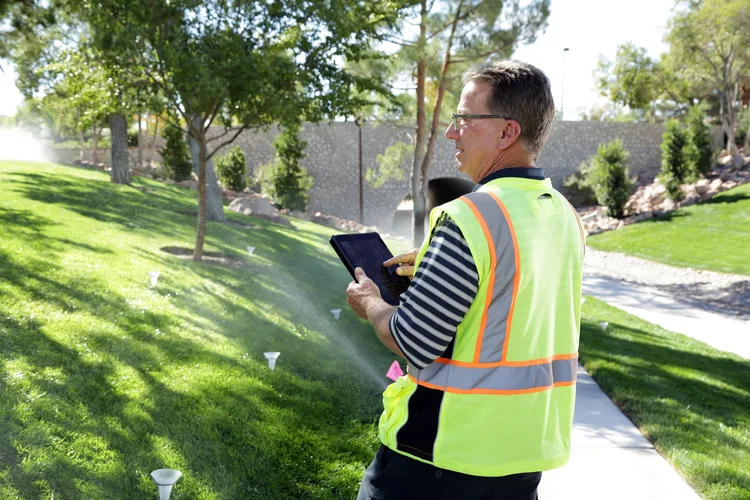
That’s the part most companies skip. Our water management team is reviewing controller data, soil moisture readings, and property conditions on a daily basis. They’re making micro-adjustments that a set-it-and-forget-it approach would never catch. The controller is the tool. The team behind it is what actually moves the needle.
Measuring What Matters
We don’t estimate savings. Every number we report is calculated from actual LVVWD meter readings compared against a three-year prior average of water use on that property. We compare monthly usage to the calculated climate-based water requirement, known as ET, to determine an efficiency baseline for each property. From there, we track whether we’re delivering the right amount of water relative to what the conditions demand.
Our communities get monthly reports and charts showing exactly how much water they used, how it compares to prior years, and where the savings are. There’s no guesswork and nothing hidden. If a property is using more water than it should, we see it immediately and make corrections.
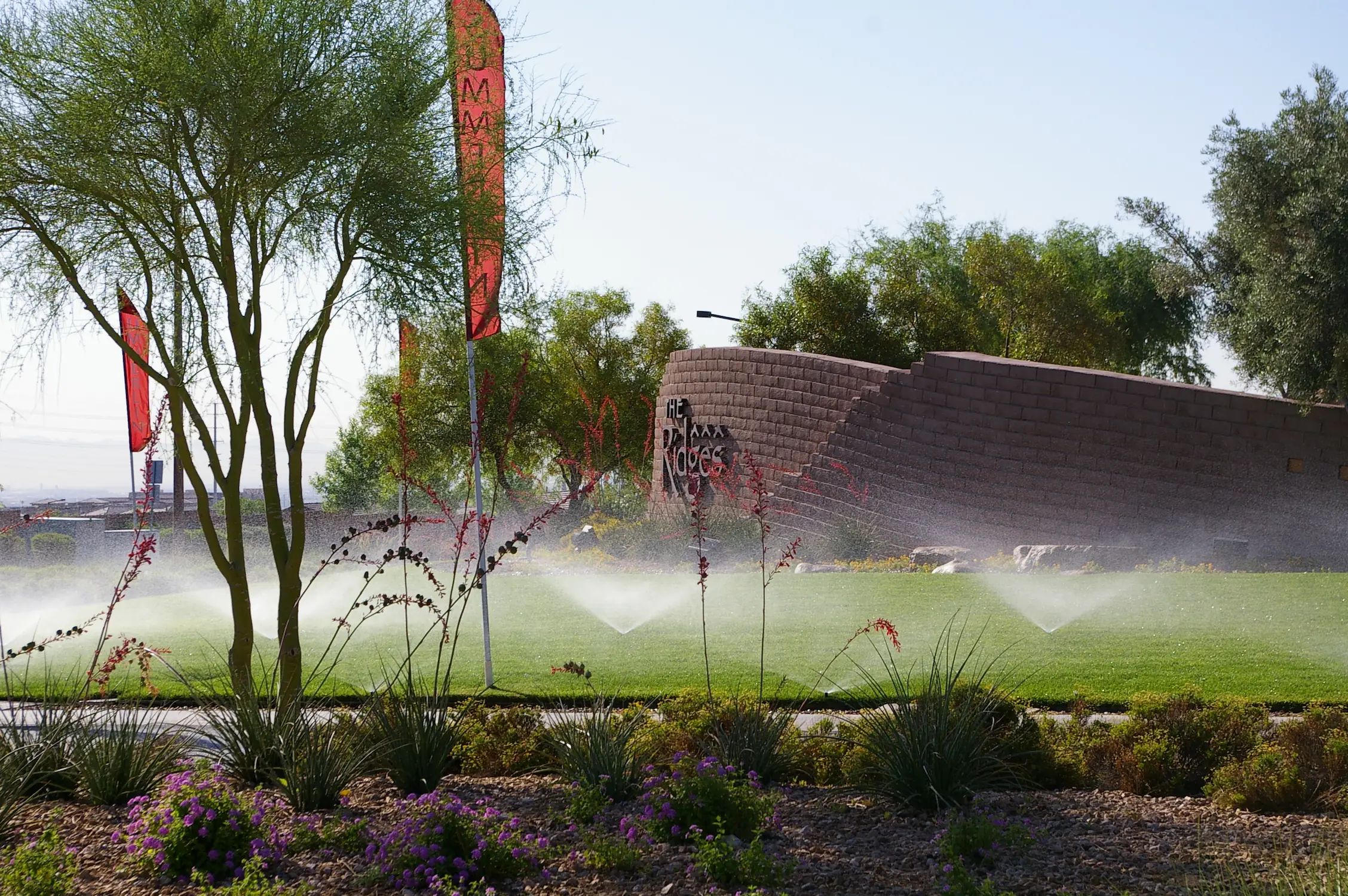
This kind of accountability is what separates a real water management program from a sales pitch. Plenty of companies promise 10% to 20% savings. We deliver those numbers because we’ve already done it across communities like Southern Highlands, Peccole Ranch, Siena, The Ridges, Summerlin South, Summerlin West, Skye Canyon, and many others.
What It Looks Like in Practice
In 2025, the Vistas community completed its first full year with WeatherTRAK controllers managing the streetscape. The result: 15 million gallons saved and $181,012 in reduced water costs. The older southern half of Paseos, also in its first full year with smart controllers, saved 8.8 million gallons and $71,915.
Those aren’t theoretical projections. Those are the actual numbers, pulled from meter readings, after one year of active management. The landscapes on both properties are healthier than they were before the transition.
The Approach That Got Us to a Billion
There’s no single trick behind saving a billion gallons. It’s a combination of things done consistently, property by property, year after year: calculating water needs based on real science, training roots to go deeper, using smart technology with hands-on oversight, and measuring everything so nothing slips through the cracks.
If your community is spending more on water than it should be, or if you’re not sure whether your current irrigation program is actually working, talk to our water management team. We’ll walk through the numbers with you and show you what a data-driven approach can do for your property.